
Design Thinking Skills for Products
Design Thinking Skills…
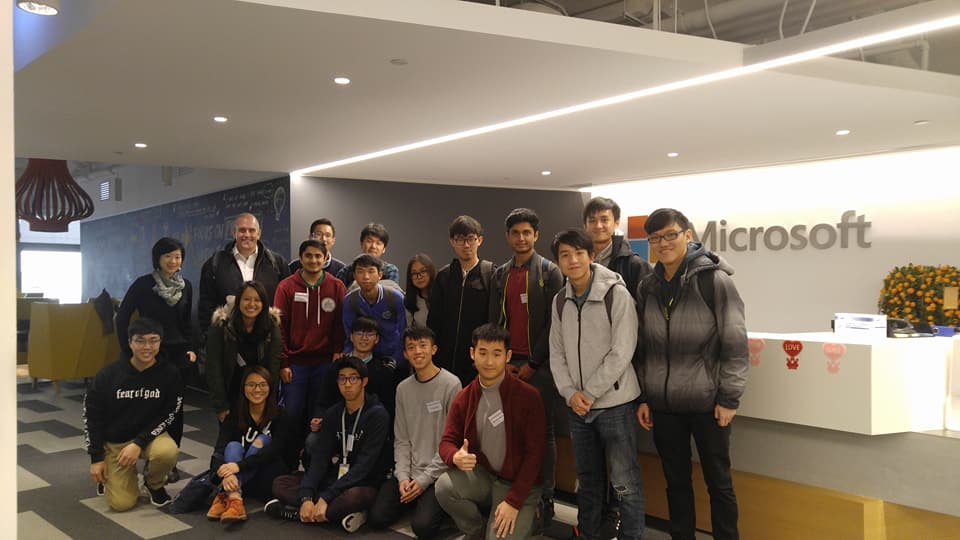
You might be wondering that this design thinking is related to what we call the way to present our product; that just makes one part of the whole course. There’s much more that makes the core part of it. Have you ever wondered how much important is the idea and designing of your project? Probably not because when we first think about the project we need to work on our technical mind focuses only on the mechanization. One thing to note is that before working on your project coming up with a distinct idea is essential. One needs to be very meticulous while shaping the idea. In addition to it, the presentation skills are also very important. In fact, the skills required to come up with the idea and before shaping it into a physical entity is what we call design thinking skills.
Before I start, let me make it clear that I’ll focus on customer centric-problem solving methodology. You can obviously use these skills in various arenas of your profession including projects, hackathons, publicity, manufacturing etc. You might also have noticed that some people find it difficult to come up with idea and thus they regard themselves being less creative, however, that’s not the way design thinker thinks. After reading this whole excerpt you’ll have a boost in creative confidence for solving problems. You’ll have your thinking style completely molded in a way a design thinker thinks. But again this is what I am presenting to you after attending an eight ours long continuous workshop.
As an introduction I’d like to make you clear with a few keywords on which this reading will be based on i.e. Empathy, Define, Ideate, Prototype, Test. These are the five stages of design thinking methodology. These four words forms the crux of the material that you’ll go through after this. The order in which these are written is also quite significant. Not only the order, the shape of the figure shown below has a deep lying ideation. For e.g. The down sloppy shape of define after empathy states that if the define part is not properly built then we need to start over the five-staged process again.
The first stage of design thinking process is “EMPATHY”. It is paramount to know why and how to be empathetic when designing solutions for customers. Sometimes very deep learning is required to fully understand the problems the customers are facing. You don’t need to follow the customer-facing problem fully because sometimes they even don’t know the problem they are facing. So the skill is to indulge yourself fully and probe into what might be the reason the customer has to face problems. To do so some practicality is required such as observing, engaging and soaking into the complication. Interviewing the customer, journey mapping customer’s experience, priorities of customers, customers’ personas etc. are some of the ways renowned companies including massive airlines companies have adopted to explore different issues that customers face.
Second stage is what we call “DEFINE”. The fact that this stage is most important of all stages is that if you fail to develop this stage you need to go all the way back to the first stage. It happens quite often that the problem that seems to e the problem is not the problem and in fact something else is causing troublesome situation. Blending the knowledge obtained from the first stage and distilling it to a specified outlook is what we construe DEFINING in design thinking process. A good analysis of the given available resources is required to DEFINE the absolute obstacle on the way.
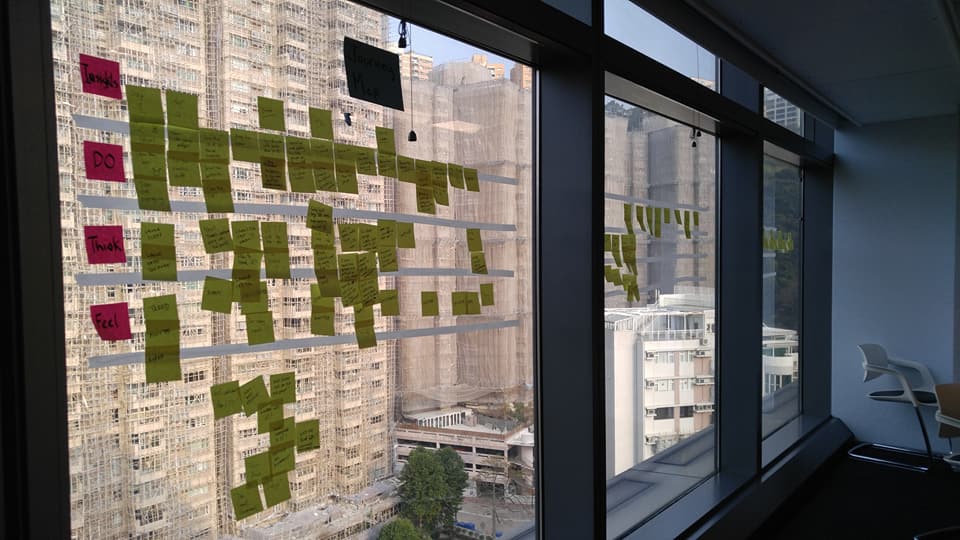
Some of the techniques involved in this process includes organizing large amount of data with respect to the surface trends which was collected in the empathizing stage. A design thinker is expected to translate multiple observations into concise and meaningful instincts. An appropriate way of doing this is by dividing the task in ‘Insights’, ‘Do’, ‘Think’ and ‘Feel’. All these steps have a pivotal role because one needs to frame a challenge that needs to be solved.
Next yet critical stage is “IDEATION”. This stage is what most people blame their creativity for. Nonetheless, ideation is not all about creativity. There are certain ways to ideate and think further beyond the scope that we’ll be focusing in this subject matter. An important principle to keep in mind is that the first idea is often not always the best idea. In the ideation process, one is expected to give permission to others to express themselves, thorough study of the pros and cons of the given idea and at last yield the best idea.
There are multitudinous frameworks that needs to be explored for this part. Placing constraints on thinking process to drive ideation deeper is one way to tackle the ideation part. Considering the goals that could be met with the following idea and the drawbacks that might arise in the idea assessment criteria is required. After the applying extensive reasoning and scrutinizing the initially obtained scenarios and information a solution pops up which is parallel to business objectives, radical for customers, very professional and technically achievable.
“PROTOTYPE”, a stage that comes before the final part. It is basically the continuation of previous stage Ideation. The goal of this stage is to construct as many prototypes artifacts as possible with the aim of getting opinion from the users regarding the issue under exploration. This step involves re-engaging the customers in process to look for the extent of validity of the solution proposed to the specific problem.
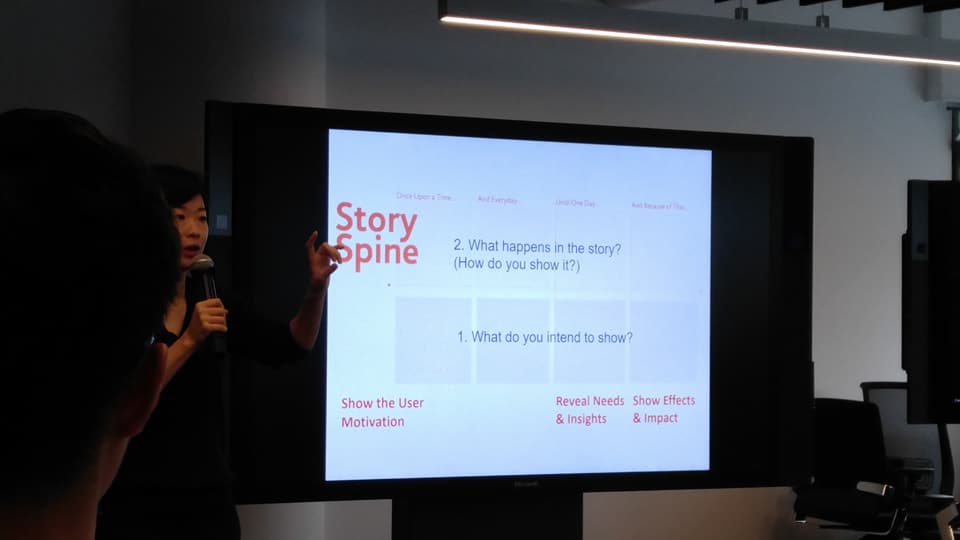
Some effective prototypes are created easily within a short span of time with lowest viable design. Although there are different ways of portraying your idea with different types of prototypes. A most common type is the story telling using a prototype to give the end user an experience. It’d be a great idea to build low fidelity prototypes by mockups, acting and story-telling. From what I remember when I did the prototype part during my workshop was to make a television using the pizza boxes, looking old using masking tapes on carboard and placing it on my head, making a hat out of a disposable plate etc. Although it looks crazy but not only it was fun doing this part but also it was a great experience of my first prototype.
Last but not the least is TESTing. Testing anything is vital in any practical work so it is in the Design Thinking process. The sole purpose of this phase is to gain as much amount of feedback from the users about idea and solution as possible. It’s not abut testing the finished product but rather it is about advancing empathy with the customer and remodeling their insights and mindset in return.
With the successive powerplay of all the above mentioned stages the process of design thinking comes to an end eventually leading to the production of a sophisticated product which is perfectly in sync with the needs of the people thus eradicating the complication that led to the initiation of the whole process. For those who were not aware about the process, just make sure you fully benefit following the skills learnt through this reading and following the steps carefully.
My Mentors:
Steve(twenty years experienced graduate of Stanford University in Executive Education Programme of Design Thinking) and Kia(Brown University graduate with extensive facilitation experience in Design Thinking workshops provided to a number of organizations in Hong Kong, including Asia Miles, Cathay Pacific Airways, Pfizer, Swire Properties, HKUST, PolyU and Google).

Leave a Comment